Arena Construction – Thinking of Building a New Horse Arena or Rejuvenating An Old One
Arena Construction, be it the building of a new one or rejuvenating an already existing one, requires careful planning and various considerations such as drainage. This is to ensure that the final result meets the specific needs of both you and your horse(s).
We have created a comprehensive guide below covering the initial planning to the finished product. From the importance of –
- Drainage
- Site Access
- Selecting the appropriate surface for your needs
- Fencing Materials
- Additions like floodlighting
- Overall Cost / Budget
The Foundation Matters – Drainage
Like every job you undertake, the foundations are the building blocks of a successful project. Horse Arena Construction is no different. With a horse arena, and especially with the British weather, your drainage is critical towards the functionality of your investment. In all cases, workers will excavate and remove the topsoil within the development area to its full depth, exposing the underlying subsoil.
The topography of the land determines how the subsoil is managed. Workers will either cut and fill or grade and level it to achieve the required elevations and slopes for a uniform surface. A slight slope typically runs along the surface to direct water toward the underlying drains. Using the latest laser-controlled equipment ensures precision, evenness, and accuracy throughout the process.
Next up is the actual drainage installation
This typically comprises of 160mm perforated main drainage pipe along one of the long elevations. This follows the grade of the prepared subsoil. A critical component is the installation of a rodding point at the head and a silt trap at the lower end. The rodding point allows access for cleaning if needed and the silt trap catches silt debris and prevents contamination. It also allows for the easy removal of captured silt.
Additionally, along this main drain there would be junction points fitted in order to easily connect the lateral drains. Lateral drains are installed at intervals of 3m to 8m width ways across the arena at 90 Degrees. The drains themselves are installed with a sufficient run in order to enable self cleaning. The number and interval of the lateral drains will depend on the nature of the site and clay soils. (If the project is on a sandy gravel then a more pragmatic approach can be taken on the drainage side of things.)
The Soak-Away
The outlet from the silt trap directs water to a soak-away or ditch, ensuring a free flow of drained water. A silt trap helps maintain clean water flow from the chamber to the watercourse. Workers then backfill the drains with 10-20mm gravel up to the top of the subsoil formation. Next, they place a woven membrane over the completed formation to separate the subsoil from the stone layers, preventing cross-contamination.
Typically, they spread and grade a type 3 graded stone over the membrane to achieve the required levels. The nominal depth is approximately 100mm with a maximum depth of 150mm, which again depends on site conditions and customer budgets. In any case it needs to be robust enough to stand up to the traffic of plant / equipment and lorries trafficking over with deliveries.
The fencing is installed and the upper layer of non-woven membrane is placed over the stone and stapled to the kickboard. All the adjacent sheets are overlapped by around 300mm and glued in place.
Arena Construction Site Access
Having good access to the project site is critical for a number of reasons.
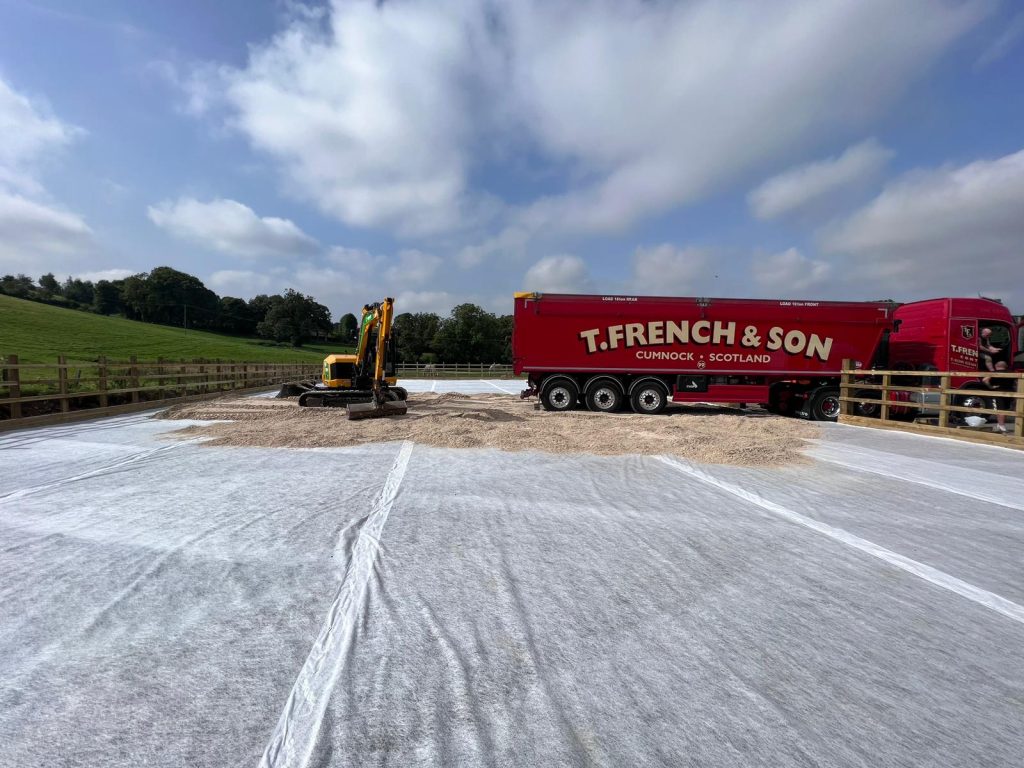
Firstly, the better site access then the ease of getting plant machinery on site. Secondly, if there is easy access then the lorries arriving to deliver the stone for the base layer then sand and fibre for the surface can arrive in articulated wagons rather than the smaller 8 wheelers.
This has a significant impact on the final cost of the project which can end up adding a few thousand £’s to the final project cost. We’ve seen customers spend money on widening their site access purely for the project and then returning it to its original condition. This proved to be a cheaper option than using the smaller wagons for delivery.
Choosing The Perfect Surface
As we covered in our previous blog “Choosing The Correct Arena Surface” if you don’t install an appropriate surface then you could be looking at a list of things that could eventually go wrong in the future. This could lead to unexpected costs, such as vet bills from injuries, failure of the surface itself which then requires a lift and new product laid and your bank account severely dented. As my dad once told me “measure twice and cut once”. Get the surface selection correct along with the drainage and you are well on your way to many years of enjoyment.
The surfaces that we supply are our surfaces of choice by Combi-Ride UK. A good surface is not just about preventing injury but also enhancing performance. Installing the correct surface can aide in gaining momentum and providing an energy return that allows the horse to move more efficiently, conserving energy and reducing the need to overwork.
The weather also plays a significant part in your choice. Arenas in the winter typically are wetter and hold more moisture, this in turn creates a more compact surface. During the drier summer months lack of moisture can play its part in reducing the stability of the surface.
Reading the above you can quickly see that the arena requires a bit of maintenance throughout the year to keep it functioning as best as possible. For this reason we use, recommend and fully endorse the ArenaMate Graders. These British made graders are superior in all aspects to keeping your arena ridable all year round. We will look to cover this aspect in a separate blog, so stay tuned.
Fencing Materials
We are now nearing the completion stage of your project and the end is definitely in sight.
Fencing is the aesthetic side of the project and gives it the finishing touch. When creating this border, its about how you want it to look. Budget and discipline often influence this choice. For example, many dressage arenas feature kickboards or sleepers as edging. In competition, dressage riders don’t normally have fencing in place to “support” the horse when doing certain movements. Whereas, a showjumper for the majority of competing are within a fenced arena so it makes sense to have similar.
Many arena constructions now eliminate right-angled corners and instead use angled designs to create a more rounded effect. You don’t necessarily ride right into the corners so what is the need here in the construction side of things? Another thing to consider is how many rails do you want or how many kickboards too. This would all be discussed at the planning stage so that there was no hidden costs towards the end.
Making sure the posts are secure in place is another thing that can be overlooked. Concreting in the posts does take a bit of time and effort, but it is very much worth that effort. With virgin earth it is difficult to maintain a secure post and rail set up without the additional help that postcrete does. It also creates a bit of protection around the base of the treated posts to provide a bit more longevity before eventually needing replaced.
Additions To Your Arena Construction
Additionally, its important to prioritise durable, safe fencing to secure the perimeter and to protect both horse and rider. The fencing should be high enough to prevent jumping out and without sharp angled edges.
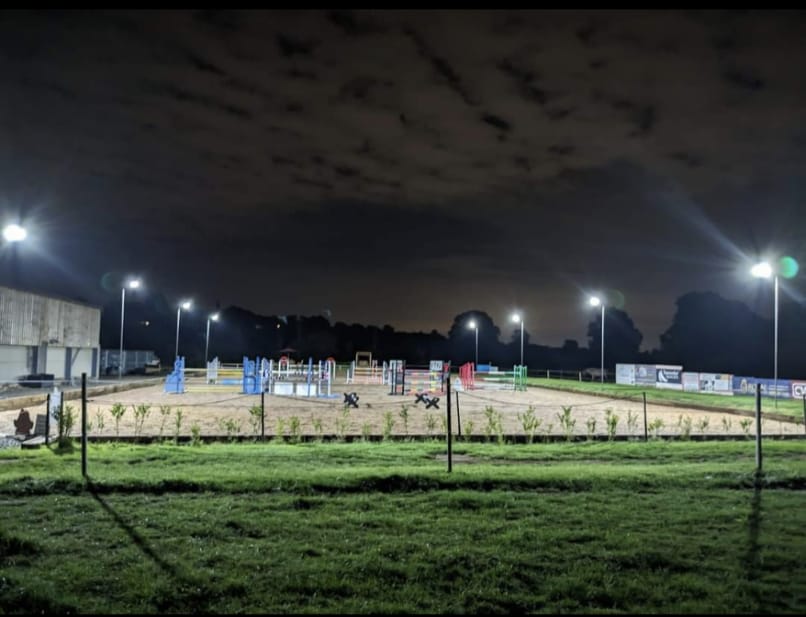
For floodlighting, we recommend installing energy-efficient lights that evenly distribute illumination, enhancing visibility without causing glare while riding. This setup ensures safe exercise after turning on the lights.
During the winter months, limited daylight can make after-work or school riding challenging. Installing proper lighting in your arena allows you to continue training and maintain both your fitness and your horse’s.
Overall Arena Construction Cost / Budget
Having your own arena at home no matter what size is most horse owners dream. However, as we all know the end result comes down to the cost of the project against the budget available. This is where Ross Kennedy and his team at CMS-Fife are able to advise. Depending on your requirements and budget the end goal will be to get your arena functioning to your needs.
Get In Touch With Us
Contact our team of arena construction experts at Construction Management Solutions – Fife for personalized advice tailored to your horse arena project.