Arena Construction – Building New or Rejuvinating Old Arenas
Arena Construction, whether its a new build or rejuvenating an existing one requires careful planning. Drainage, site access, surface choice, fencing lighting and budget all play critical roles in ensuring the arena meets your needs and supports your horse’s welfare.
The Foundation Matters – Drainage
Strong foundations are the backbone of every successful project. With British weather, effective drainage is essential for arena functionality. Workers excavate the topsoil to expose subsoil, then grade and level it to achieve uniform slopes. A slight fall directs water toward drains, with laser‑controlled equipment ensuring precision.
Drainage installation typically includes a 160mm perforated main pipe along one long elevation, fitted with rodding points and a silt trap. Lateral drains are installed at 3–8m intervals across the arena, depending on soil type. Gravel backfill, woven membranes and graded stone layers complete the system, ensuring durability and clean water flow.
Arena Construction Site Access
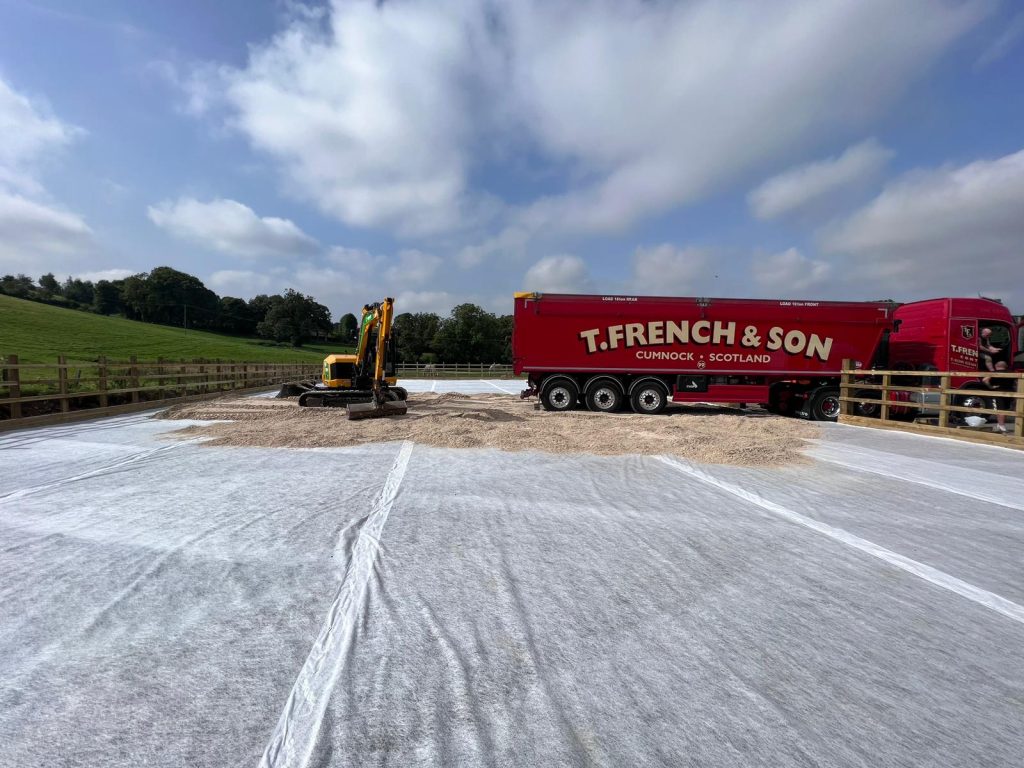
Good site access reduces costs and simplifies logistics. Wider access allows articulated wagons to deliver stone, sand and fibre efficiently, often saving thousands compared to smaller lorries. Some clients temporarily widen access for the project, then restore it afterward.
Choosing The Perfect Surface
Selecting the right surface is vital for safety, performance and longevity. Poor surface choice risks injuries, costly repairs and reduced usability. Combi‑Ride UK surfaces provide secure footing, energy return and consistent performance across disciplines. Seasonal weather changes affect moisture and stability, so regular maintenance is essential. We recommend ArenaMate Graders to keep surfaces rideable year‑round.
Fencing Materials
Fencing provides the finishing touch and must balance aesthetics, discipline requirements and durability. Dressage arenas often use kickboards or sleepers, while showjumping arenas benefit from secure fencing. Rounded corners are increasingly popular, reducing unused space. Posts should be concreted for stability and longevity, with safe, durable rails to protect horse and rider.
Additions – Floodlighting
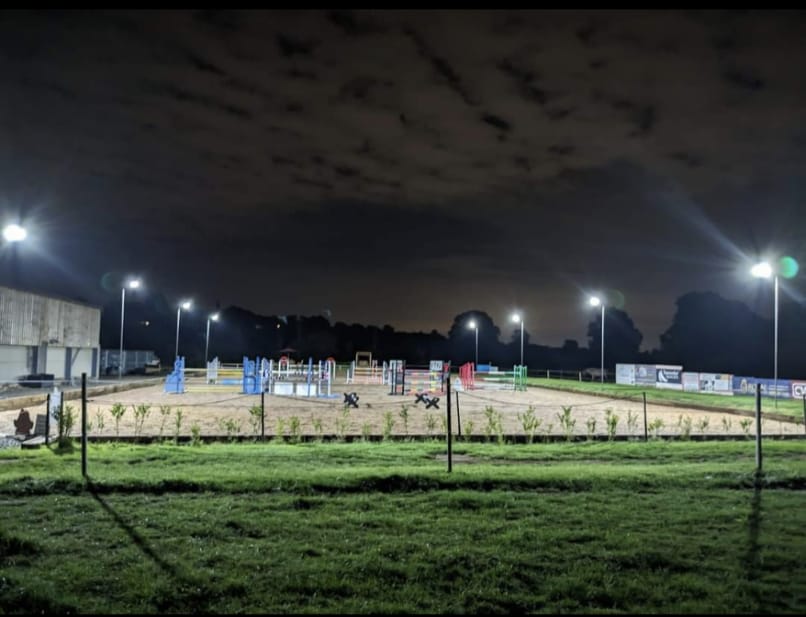
Energy‑efficient floodlighting extends training hours during darker months. Even illumination improves visibility without glare, ensuring safe exercise after daylight fades.
Overall Cost and Budget
Every arena project must balance ambition with budget. Ross Kennedy and the CMS‑Fife team provide tailored advice to deliver arenas that meet your requirements while staying cost‑effective
Get In Touch With Us
Contact Construction Management Solutions – Fife for expert guidance on building or rejuvinating your horse arena
Frequently Asked Questions – Arena Construction
How long does arena construction usually take? Timelines vary by site conditions and project scope, but most arenas are completed within several weeks.
Do I need planning permission for a horse arena? In many cases, yes. Requirements depend on local regulations, so always check with your planning authority.
What is the most important factor in arena construction? Drainage is critical. Without effective drainage, surfaces deteriorate quickly and usability is compromised.
Can existing arenas be rejuvenated instead of rebuilt? Yes. Many older arenas can be upgraded with improved drainage, new surfaces, and fencing adjustments.
How much does a typical arena cost? Costs depend on size, surface choice, access, and additions like fencing or lighting. CMS‑Fife provides tailored quotes.
What surface is best for my discipline? Dressage, showjumping, and general riding each benefit from different surfaces. Combi‑Ride UK offers options suited to all disciplines.